
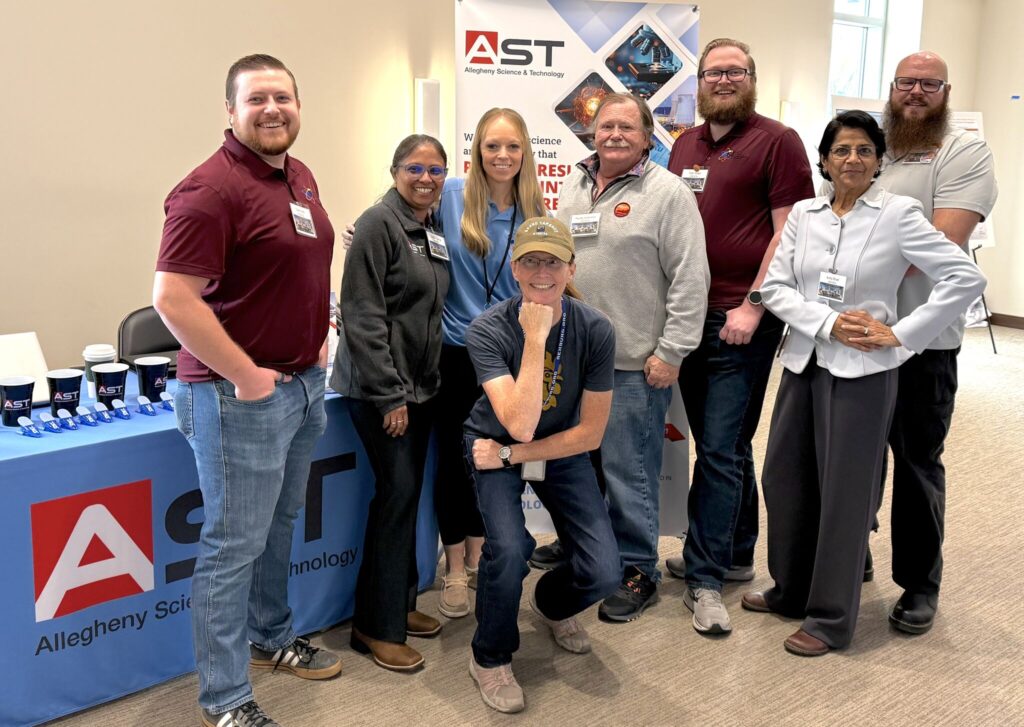
Team AST took to the stage multiple times at RESL 2025, sharing real-world methods, lessons learned, and practical frameworks that labs can apply now. In this follow-up, AST VP Dean Groetzinger and Subject Matter Expert Michael Strangfeld reflected on what stood out—from the conference’s applied focus to the collaborative momentum across national labs, agencies, and industry—and why it mattered for AST’s mission.
What stood out to you most about this year’s RESL Conference?
DG: What stood out most was how applied and solutions-focused the entire conference felt this year. Presenters weren’t just sharing research—they were sharing implementation strategies, lessons learned, and practical frameworks that labs can adopt right now. The collaboration between national labs, federal agencies, and industry was especially strong, and the openness around challenges (not just successes) made the discussions far more meaningful.
MS: The level of commitment. During the longest known government shutdown, where travel was limited if not outright disbarred, professionals showed up in much higher numbers than anticipated. Especially when you consider the cold weather experienced in Idaho and the major delays at airports.
How did presenting at the conference help highlight the depth of AST’s expertise and contributions in the field?
DG: Presenting gave us the opportunity to clearly demonstrate the breadth of AST’s technical capabilities—from method development to operational support to data interpretation. By walking through real-world applications and the measurable improvements we’ve helped deliver, it showed attendees that AST isn’t just a service provider; we’re a strategic partner who understands both the science and the mission behind it. The Q&A sessions especially underscored that AST is viewed as a go-to resource for both technical depth and practical implementation guidance.
MS: RESL/AST are in my humble opinion the industry leaders in this field. Many of our presentations had apriori solutions to problems listed in proceeding presentations. Many of the presentations had special slides set aside to specifically thank RESLs contributions to their programs/research.
Were there any trends, technologies, or research areas that really caught your attention and generated a lot of conversation?
DG: A few themes kept coming up in discussions:
- Automation and sample throughput — everyone is looking for ways to streamline radiochemical workflows without compromising quality.
- Advances in mass spectrometry — especially around sensitivity improvements and integration with rapid screening methods.
- Data integrity and digital modernization — better tools for data handling, traceability, and reproducibility were major talking points.
- Cross-lab standardization — there’s a growing push for harmonizing methods across organizations to reduce uncertainty and improve interoperability.
The shared excitement around integrating traditional radiochemistry with modern analytical platforms was one of the biggest takeaways.
MS: Fresh Fission Products. Emergency Response. Fukushima Remediation.
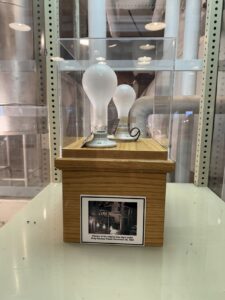 Ok, tell us about your trip to the EBR-1 museum!
DG: The visit to EBR-1 was a highlight. Standing inside the first reactor to ever produce usable electricity felt like stepping directly into the early chapters of nuclear history. The control room, instrumentation panels, and reactor face all had this incredibly tangible sense of innovation and “figuring it out as they went.” It’s rare to be in a place where you can feel the weight of the scientific breakthroughs that happened there, and the tour added a memorable historical context to the technically focused conference.
What did you take away from connecting with other professionals and researchers at the event?
DG: The biggest takeaway was how similar our challenges—and opportunities—are across the community. Whether people were from national labs, regulatory agencies, or private sector groups, everyone is grappling with modernization, workforce development, and increasing analytical demands. The conversations reaffirmed that collaboration is not only valuable, but necessary. I came away with new contacts, new ideas, and a stronger sense of alignment with where the field is heading.
MS: I made it my personal goal to connect with one of the presenters and try and bring home a project we could collaborate on. I began working on the wound study with ORNL and have already had some success in early experiments. I have 2 other programs that we may participate in next year. Including the analysis of photofission samples which I am very interested in.
If you could summarize the overall experience in a few words, what 3 words would you pick?
DG: Collaborative. Energizing. Insightful.
MS: Impact. Opportunity. Fun.